We're in rural Alabama right now, and I always love reading all of the church signs. They are creative and theological masterpieces at times. I made Tyler pull a u-turn and into the parking lot so I could grab this picture on our way home from a trip to Birmingham last night.
Wednesday, June 18, 2008
Marquee
We're in rural Alabama right now, and I always love reading all of the church signs. They are creative and theological masterpieces at times. I made Tyler pull a u-turn and into the parking lot so I could grab this picture on our way home from a trip to Birmingham last night.
Thursday, June 12, 2008
Plaguing Thought
This sorta traces back to my questions about God's intevention (when, where, and how).
Revelation 3:14-22 is a rather common passage for evangelicals, as it mistakenly serves as a warning against the temptation to become complacant ("lukewarm") in your faith. But when you read the whole stinkin' passage you realize it's about wealth--not faith! Vss. 15-16, "I know your works; you are niether cold nor hot. I wish that you were either cold or hot. So, because you are lukewarm, and neither cold nor hot, I am about to spit you out of my mouth. For you say, 'I am rich, I have prospered, and I need nothing.' You do not realize that you are wretched, pitiable, poor, blind, and naked." This is a daunting message for the Laodiceans, who probably thought they were doing alright in this world, given their prosperity and all.
I'd rather be from the church in Smyrna, which is addressed just a chapter earlier in 2:8-17. Vs. 9, "I know your affliction and your poverty, even though you are rich. I know the slander on the part of those who say that they are Jews and are not, but are a synagogue of Satan."
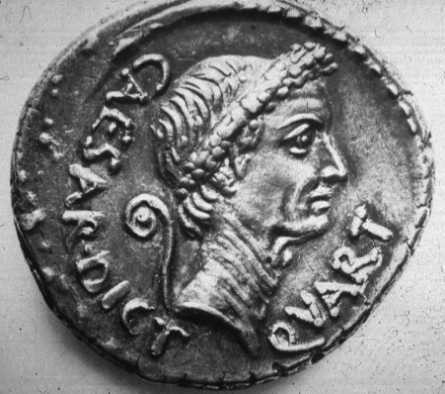
Aight. What about this? If Rome is the big bad devil in this book of end times, and if everything that Rome does is evil, then that includes their economic system. Their coins are marked with the face of Caesar and other "lords," their taxation system is inherently corrupt, and their rich prosper off of the weakness of the poor. So the Smyrna folk refuse to participate in Rome's systemic evil. They are materially poor. Yet, John says they are rich--rich in their faith, rich in the promises of fulfillment that depend on Christ's return, and rich because God's heart is tender toward them.
Down with the rich, tepid, Laodiceans. They are indifferent to the corruption of Rome; they participate in her politics by gambling in the game of empire economics, and while they are secure in their possessions, too bad their eternity is marked by an absence from God. (I mean, "spit from the mouth of God?" That's a fairly vivid image!)
So if God's blessing resides on the materially poor, who claim their riches in Christ and who will be completely wealthy in the future for faithfully sitting at the table of kingdom economics, and not at one of those other temporal, luck-bound casino tables, if God's blessing is on them, then why do they still have to worry about the bills each month, the piles of debt, the lack of education their children receive, the multiple minimum wage paying jobs they work that still leave them financially destitute and exhausted?! I kind of want to scream on their behalf, "If you love us so much, and if we're so blessed, then where the hell is our shelter, water, and food? I'm sick of waiting for the final fulfillment; I'm tired and hungry."
It sure is a subversive picture of love and grace, you have to admit. One that the world will never understand. One that I often fail to get, even though I claim allegience to God's economic pattern. It bothers me that those over at the roulette wheel, playing with their stocks, negotiating meeting times with their financial advisors, and careless about those their power hurts are so comfortable (I won't say content or happy).
What does it mean to consider ourselves blessed? If God knows our afflictions, and the ultimate victory is alive in the power of the resurrected Christ, what is this middle time in the course of the history and future of the world all about? I am going to stop asking questions right now and go read Paul Ricoeur's, The Symbolism of Evil. Maybe that will make some sense of it all for me. (just kidding...I'm not that big of a dork.)
But seriously, when we consider the marginalized, this message of redemption and restoration sure does get bigger and better! Amen?
Revelation 3:14-22 is a rather common passage for evangelicals, as it mistakenly serves as a warning against the temptation to become complacant ("lukewarm") in your faith. But when you read the whole stinkin' passage you realize it's about wealth--not faith! Vss. 15-16, "I know your works; you are niether cold nor hot. I wish that you were either cold or hot. So, because you are lukewarm, and neither cold nor hot, I am about to spit you out of my mouth. For you say, 'I am rich, I have prospered, and I need nothing.' You do not realize that you are wretched, pitiable, poor, blind, and naked." This is a daunting message for the Laodiceans, who probably thought they were doing alright in this world, given their prosperity and all.
I'd rather be from the church in Smyrna, which is addressed just a chapter earlier in 2:8-17. Vs. 9, "I know your affliction and your poverty, even though you are rich. I know the slander on the part of those who say that they are Jews and are not, but are a synagogue of Satan."
Down with the rich, tepid, Laodiceans. They are indifferent to the corruption of Rome; they participate in her politics by gambling in the game of empire economics, and while they are secure in their possessions, too bad their eternity is marked by an absence from God. (I mean, "spit from the mouth of God?" That's a fairly vivid image!)
So if God's blessing resides on the materially poor, who claim their riches in Christ and who will be completely wealthy in the future for faithfully sitting at the table of kingdom economics, and not at one of those other temporal, luck-bound casino tables, if God's blessing is on them, then why do they still have to worry about the bills each month, the piles of debt, the lack of education their children receive, the multiple minimum wage paying jobs they work that still leave them financially destitute and exhausted?! I kind of want to scream on their behalf, "If you love us so much, and if we're so blessed, then where the hell is our shelter, water, and food? I'm sick of waiting for the final fulfillment; I'm tired and hungry."
What does it mean to consider ourselves blessed? If God knows our afflictions, and the ultimate victory is alive in the power of the resurrected Christ, what is this middle time in the course of the history and future of the world all about? I am going to stop asking questions right now and go read Paul Ricoeur's, The Symbolism of Evil. Maybe that will make some sense of it all for me. (just kidding...I'm not that big of a dork.)
But seriously, when we consider the marginalized, this message of redemption and restoration sure does get bigger and better! Amen?
Monday, June 2, 2008
Last Quote--I Just Finished the Book
Give it all away-plain as that.
Dang.
Labels:
class,
consumerism,
reflections,
scripture
Weekly Wheeler Quote
She is discussing in her conclusion one of the points of her entire book, which is to provide a methodological and exegetical approach that leads the Biblical reader, scholar and lay person alike, to a conclusive reading that promotes better contextual understanding combined with appropriate contemporary, ethical insights. Keeping this in mind she writes,
"If the point of the Lucan discourse about anxiety and possessions (12:22-34) is to draw out the implications of Jesus' advent for economic life, then there is a third option, which is neither to disregard it nor to take its call for divestiture as a permanent and binding rule. Instead, it may serve the church as a call to single-heartedness and a warning against the insidious idolatry of a safety medicated by what one owns. Within this framework, its imperative, "sell your possessions and give them to the poor" stands as a model of, and a provocation to, "seeking first God's kingdom." It is a counterweight to every complacent self-assurance, "I have given enough," and a continual challenge to consider what the church's material life says about the true objects of its trust and its worship. To take seirously as a model is to call into question many of the assumptions of middle-class existence, including the fundmanetal assumption that there is such a sthing as "economic security" and that Christians are entitled to it."
Okay, I could go on. I wish I could post the whole book, but alas, I'll spare you. So, given the frequency of the Oprah show hosting financial analysits who work with common middle class Americans to help alleivate their debt (almost as much as that Dr. Oz is on now), I do not think we are in a position anymore to claim any sort of economic security in the middle class, which is probably just another reason that the rich are getting richer and the poor, poorer. And if the middle class comprises a large majority of American church-goers, what is the true object of our churches material lives as they relate to what they actually trust and worship? Dare we allow ourselves to be this honest? Aren't most churches claiming economic security (because they love God) and therefore fail to see opportunities to follow Luke's Jesus that teaches give more because they feel they have already given enough?
"If the point of the Lucan discourse about anxiety and possessions (12:22-34) is to draw out the implications of Jesus' advent for economic life, then there is a third option, which is neither to disregard it nor to take its call for divestiture as a permanent and binding rule. Instead, it may serve the church as a call to single-heartedness and a warning against the insidious idolatry of a safety medicated by what one owns. Within this framework, its imperative, "sell your possessions and give them to the poor" stands as a model of, and a provocation to, "seeking first God's kingdom." It is a counterweight to every complacent self-assurance, "I have given enough," and a continual challenge to consider what the church's material life says about the true objects of its trust and its worship. To take seirously as a model is to call into question many of the assumptions of middle-class existence, including the fundmanetal assumption that there is such a sthing as "economic security" and that Christians are entitled to it."
Okay, I could go on. I wish I could post the whole book, but alas, I'll spare you. So, given the frequency of the Oprah show hosting financial analysits who work with common middle class Americans to help alleivate their debt (almost as much as that Dr. Oz is on now), I do not think we are in a position anymore to claim any sort of economic security in the middle class, which is probably just another reason that the rich are getting richer and the poor, poorer. And if the middle class comprises a large majority of American church-goers, what is the true object of our churches material lives as they relate to what they actually trust and worship? Dare we allow ourselves to be this honest? Aren't most churches claiming economic security (because they love God) and therefore fail to see opportunities to follow Luke's Jesus that teaches give more because they feel they have already given enough?
Tuesday, May 27, 2008
Monday, May 26, 2008
Can't Help Myself--'Nother Wheeler Quote
--Preach it, Sista!
Monday, May 19, 2008
Too Much
I have been feeling so overwhelmed by this topic lately; I think that's why the posting has slowed down quite a bit from when I first began. Initially my mind was exhilerated by the ideas I wanted to share, the books I was/am reading, and the resources that have influenced mine and Tyler's finances in the last two years. But now...I am just plain tired. Not so much tired of thinking about these things-that will probably always keep me fired up and energized. I think my fatigue stems from the feeling of having so much to unload-- I'm not sure where to begin anymore.
Actually, here's the truth. About six weeks ago a friend of mine from college had a stroke and through a rough series of events has been on full life support since then. Mostly, I have been asking about God's intervention. How, when, why, where does God intervene or not intervene? Is this 'God intersecting our life stuff' just something we tell ourselves to feel better? I do still believe that God moves in our lives, but to what degree? This question is not just about my friend, but about all of life. Particularly, about poverty as well.
Where is God in the midst of the traumas in our world? I see Scritpure narrative teaching us that God is always present and near to us. I believe this. However, when and where are the miracles? I tend to believe right now that more than interacting in the processes of my friend's recovery, God is present through the redemption that comes to her family as they process this tragedy, cope in the meantime, and plan for the future. But isn't it true for the impoverished as well? God is in the process of redeeming this world through the power of Christ and the presence of the Holy Spirit. So much so, that I confidently want to say, that God is just as grieved by the plight of the poor as anyone else who cares deeply for them, even more so, just as God is also grieving for my friend alongside her family. So why then, does it continue? Why does my friend still need her ventilator? Why is Skid Row a real place, and where did this AIDS pandemic originate? Did God surrendur the right to fully intervene and rescue when humanity was incorporated into the process of serving as God's helpers in redeeming and being redeemed? I am thankful for the Gospel of Matthew today (see prior post) and his eschatological assumption that Christ will come again and God's kingom will be fully restored. This is a truth I hang to tightly and often!
My work on the site is officially "due" on Wednesday, but I think my thoughts here will continue. Please keep reading and participating as you feel led. I will blog when the thoughts are too much to keep in and as questions keep arising.
Subscribe to:
Posts (Atom)