Showing posts with label consumerism. Show all posts

Monday, June 2, 2008

Last Quote--I Just Finished the Book

Wheeler compares our healthy amount of possessions to the alcoholic who says he could stop drinking anytime he wanted to, but continues to hurt people and himself in the quest for more to drink. She coins a phrase that I love: "the liberty of conscience" vs. "the bondage of addiction." The alcoholic knows he drinks too much (liberty of conscience) but he can't stop despite it (the bondage of addiction). So that, the person caught in the negative cycle has too greatly blurred the lines between liberty and addiction. The same is true for the shopper, not even the shop-a-holic. She concludes, "The only way one can be certain that possessions do not reprsent a moral and spiritual peril is continually to leave them behind!" --As the alcoholic must leave behind his drink again and again in an effort to sober up and be all that God created him to be.

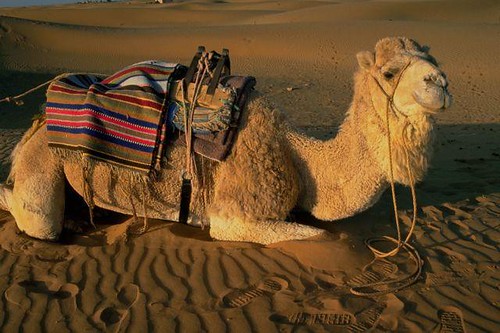
Our possessions bind us to a particular location, to a certain way of life (whether we enjoy it or not) in an effort to make ends meet, and they deafen us to the call of God on our lives and in our churches. How can we be confident of our ability to discern a vocation in the midst of such economic pressure? (All questions asked by Wheeler in one way or another.) The New Testament's view on wealth is that it is more than just a stumbling block to discipleship or an idol of our worship. It is something that must continually be denied so that we can, like the camel, more easily find our way through the eye of that prickly needle and find peace and pustice in the kingdom of God. So here's my question, how do we suck in our guts enough to slide through such a tiny, pinhole opening meant to lead to God?

Give it all away-plain as that.

How do we define ourselves, for whom do we work, and to what extent does our spending threaten the human rights of others? (Again, more Wheeler questions at the close of her book.) Questions that if answered honestly will help us shed our pounds so that the slim needle hole won't feel quite so constricting and will also show the nearness of God.

Dang.

Tuesday, May 27, 2008


In my opinion, this image speaks way more adequately than anything I've written here in the last eight weeks, and it sums up well several of my points about American consumerism, political corruption, and our frustration with not feeling like we have enough.

Monday, May 12, 2008

Comment

This is a guest posting, so to speak. The writer is a one of my best and childhood friends who currently lives in Switzerland (love takes us to crazy places), after having lived in Denver for a while where she worked at the Denver Rescue Mission. She is smart, thoughtful, and honest, albeit a bit technicologically challenged. ha. I added the photos, which will probably make her chuckle. Here goes:


 Lauren,

Greetings, friend. How are you?  I wanted to let you know that I've read your entire blog and just wanted to say I think it's a cool project. It'sinteresting that your struggle seems to be fighting the fear of seeming prideful, like you have all the answers and can outline how to save the world on your website. It doesn't come across like that AT ALL. It actually sounds really humble-- a real person, albeit privileged, struggling with figuring out what her (or anyone's) role might be in the poverty predicament. Props for pondering it. 

I don't even get out of the thinking about things stage (much less to the action phase) because I'm too afraid of seeming like a hypocrite, even if well-intentioned. I wouldn't have had the courage to set up a blog like yours because I would have thought I was a hypocrite and would have been afraid that other people would think the same. Oh, cool-- another rich white girl with a catalogue-perfect looking little family (all that's missing is the golden retriever) singing the woes of the world from her ivory tower. Like, oh my god. Isn't it like, so terrible that people are like starving? You know what I mean? It's like totally tragic, you know? Let's like have a bake sale or something for them or maybe we could like, package up our leftovers from PF Chang's and mail those poor kids some food.... I'm so afraid of being criticized or of doing something wrong or useless that I don't do ANYTHING. Now in my mind I know that Jesus would probably smile
more on someone who tried to do something and perhaps failed, or worse, did damage, than someone who sat in the wings and did nothing. So , I repeat, props to you for starting the dialogue. It's the necessary first step. Hopefully it will eventually lead to some action, which I would presume is the ultimate and eventual goal. 

My family proposes serving at a soup kitchen as a family Christmas activity every year and every year I poo poo it because I think it's indirectly arrogant. I feel like if we don't do it all year and if caring for the poor isn't a part of our daily lives, then it's almost insulting to waltz in there on Christmas so that we can feel good about ourselves. I fear that I will do more harm than good because I think the people being served can sense the volunteers' motives and I think it's demeaning and insulting to them. 

Question: Is a deed "good" (or bad) because of 1) its results  2) its motive 3) both or 4) neither? An example:  Let's say I'm a rich politician. In order to get elected, I decide to build a homeless shelter even though I don't give a rat's ass about the people-- only my election. As a result,
hundreds of people are off the streets and have a hot meal at night. So, it was with an impure motive, and therefore, kind of tainted, but the result is good. What are we to think about a situation like this? What's the alternative? Is there one? Or, consider giving politically-motivated aid to foreign countries.  Wrong motives, but at the end of the day the people have some rice in their bowls.   

In my life right now, I'm trying to find the balance between principle and reality. I want to be a person of principle. I want to base my actions upon them. I think I would prefer to sleep on the street rather than take dirty charity from some slimeball politician (I say that now as I write on my
$1000 computer in my warm dry apartment....) 

The problem of poverty seems so big and so complex and therefore overwhelmingly untouchable. The roots are hopelessly entangled and every seeming solution has a pitfall. I can not speak for everyone, nor do I think it is the solution for everyone, but given my interests, gifts, and personality, I'm coming to see my role in the poverty problem as bottom-up as opposed to top-down. I might mentor, or "adopt" one family in my little town and hopefully that will make a difference. I know there's a need for lobbyists, politicians, shiploads of foods sent to foreign places, etc., but I see my role on a smaller scale.  That's one. And two, what's I'm really into at the moment is a) the idea and role of "community" and 2) local economy. Very oversimplified, the problem of poverty could be seen as the result of the breakdown of the local community and therefore the first step (not cure-all) in alleviation of poverty would be in the restoration of
community. 

When you have a minute, you might be interested to consider some excerpts from a collection of essays called THE ART OF THE COMMONPLACE by KY writer Wendell Berry, whose thoughts have been hugely influential in my life over the last year. I'm sure I want to pursue social work, but I often fear spinning my wheels in the wrong direction--being more a part of the problem
than the solution. As the result of reading some of his thoughts, I feel more convinced than ever of my current project: to develop a community garden project with the goals of naturally, providing a source of healthy, organic food, but also providing a social gathering place where people (for example of a certain apartment complex) can meet and work with their neighbors, hopefully fostering integration of marginianalized (ex: elderly, refugees, poor...) people.

If I could allow myself the liberty of reducing Berr'y thoughts to the "gist",  I would put it like this: As I understand it, he believes that most of society's problems that keep cropping up in the headlines (racial tension, the environment, crime, poverty, etc.) stem from the industrialization, urbanization, and globalization of the world.  He says we've got to stop tinkering away at these problems piecemeal with government programs or well-meaning social aid organizations--it's like pouring water solely on the leaves of a plant instead of its roots.  Everything is connected. The environment affects the economy(not to mention health, happiness...)  If the economy is bad, there is usually more crime as people get more desperate. And on and on. 

Take a common headline for example: Crime. He looks at crime as the result of the breakdown of community. Before, people lived in small communities where everyone knew each other. For one, you're less likely to wrong your neighbor because you actually know him and also, you probably depend on him for some reason or another (he's the butcher, the baker, the candlestick
maker, etc.) and if you murder him or steal his cow, you won't have anything to eat yourself. Additionally, if you're up to no good, Aunt Lulu down the road is going to see you and tell your family and you'll be ashamed and held accountable. 

Nowadays, we live in highrise apartments where we know no one and no one knows us. It's psychologically much easier to steal when you're taking "that guy's" TV instead of "Ole Farmer Joe's" TV and even if you get caught, it's just something written in a folder in a filing cabinet-- you never have to face the people you wronged- never have to apologize or make amends. 

Same for environment. We're so mobile these days, flitting in and out of different towns that we never have to face the consequences of our actions on the local community. If my condo is built on the last green space in town, or if the local school isn't very good, who cares? When I get that promotion next month, me and hubby are moving to the next best suburb and they have better parks and nicer schools... Point being, when you are rooted somewhere, and when there is a local economy instead of chain stores and
restaurants, you are more likely to have relationships to your neighbors and are more likely to get politically and environmentally involved since whatever happens directly affects you and the future generations of your family. 

It sounds all hippy happy-go-lucky and simplistic, but it makes sense to me that a community naturally lends itself to taking care of its members and its surrounding environment much as the Acts church model. We shouldn't need social welfare programs if we had any decent communities.  So Joe Smith lost his job and is down on his luck.  People cook for hum, babysit his kids, lend him a car, etc. until he's back on his feet. He's thankful for their help and support and there isn't much danger that he will abuse or take
advantage of their help because they have a relationship and he knows that while their help is gladly given, it has its limits and he's expected to carry his own weight again.  Then he'll be the one helping the next guy who falls into the same situation. Now instead,  when Joe's getting someanonymous check in the mail every month, 1) what motivation does he have to look for a job? There's no embarrassment. He's not putting anybody out.
He'll keep drawing that check as long as it keeps coming. 2) What chance does he  have to get out of the welfare trap even if he wanted to? He can't make something out of nothing. He can't magically find the skills or motivation to do that if he doesn't have them to begin with-- He needs the example, push, and interdependence on his neighbors and family. 

So I guess that was more than the "gist." Got a little carried away there. The bottom line is that instead of trying to imagine the perfect cure-all for world poverty (or any of the other big problems of our time), we'd be far better off, and lots of the problems (like the environment or crime) would probably resolve themselves en suite, if we would work to reestablish a local economy (so that everyone has a job suitable to the environment in which he lives and isn't dependant on a fickle global market,) and foster a sense of community with those around us.  

Some of Berry's thoughts (hopefully still interesting even though they've been taken out of their original context):

(Religion) It has encouraged people to believe that the world is of no importance, and that their only obligation in it is to submit to certain churchly forumulas in order to get to Heaven.  And so the people who might have been expected to care most selflessly for the world have had their
minds turned elsewhere-to a pursuit of "salvation" that was really only another form of gluttony and self-love, the desire to perpetuate their lives beyond the life of the world.a man, while pursuing Heaven with the sublime appetite he thought of as his soul, could turn his heart against his neighbors and his hands against the world.  
----------------------
Once the revolution of exploitation is under way, statesmanship and craftsmanship are gradually replaced by salesmanship (the craft of persuading people to buy what they do not need, and do not want, for more than it is worth).  Its stock in trade in politics is to sell despotism and avarice as freedom and democracy.  In business it sells sham and frustration as luxury and satisfaction.  The constantly expanding market.is still expanding-no longer so much by expansions of territory or population, but by the calculated outdating, outmoding, and degradation of goods and by the
hysterical self-dissatisfaction of consumers that is indigenous to an expoitive economy. 
-------------------------
We do not have a working concept of economic justice.  We ae resigned to the poor principle that people earn what they earn by power, not by the quality or usefulness of their work.  Insurance executives, doctors, lawyers, mechanics, factory workers, and garbage collectors all earn in proportion to their power. People such as small farmers who have no power must resign
themselves to earning what they can get. 

In such a society our private economies will depend less and less upon the private owenership of real, usable property, and more and more upon property that is institutional and abstract, beyond individual control, such as money, insurane policies, CD's, stocks.And as our private economies become more abstract, the mutual, free helps and pleasures of family and community
life will be subplanted by a kind of displaced or placeless citizenship and by commerce with impersonal and self-interested suppliers.


Guess that ought to do it for now! If creating dialogue is you goal, then there's 5 pages of dialogue for you from someone who is equally concerned and equally lost as you!

PS-At time of writing, the last entry I had read is For Love of Jimmy. Just checked your site again. See now that you have Acts on there, and I saw the world "community" while I was skimming just now.  Great minds think alike! Will catch up on your blog now. Some of what I wrote may be redundant but it's cool we were on the same wavelength without knowing it

Friday, May 9, 2008

Last Minute Gift Idea


Those of you still pondering what to give mom for mother's day have a great option through Kiva. Kiva is a micro-lending website that allows you to designate an amount of your choosing and offer a loan to an individual in the developing world who needs assistance in an entrepreneurial endeavor. Tyler and I have helped a single mother with her chickens in Cambodia and a another woman begin a cell phone business in Nigeria (pictured above). It's cool. Once the recipient of the loan has repaid the amount, you can either choose to recollect your funds or circulate them back out to another business person.

The Mother's Day gift works by you giving a gift certificate to your mom for the prepaid amount. Then your mom gets to choose who and what to donate the money to. It's a really neat way to give a gift in a meaningful way. 

Friday, April 18, 2008

Developing Nations Skipping Modernity?--Rant #2

A fascinating comment made by one of my favorite professors in a class a few quarters back was on the nature of the third world and their apparent cursory regard for the modern era (the Enlightenment up through the mid-twentieth century?). Did Indonesia skip the onset of rantionalism, and India the quest for absolute Truth? I'm not claiming this happened fully and completely, but it is curious that teenage shepherd boys isolated in the middle of a Bengali field are often carrying cell phones. Regardless of whether or not the signal is alive and working, the fact of the matter remains, new businesses are emerging throughout developing countries that insinuate there is a growing use of technology that is providing many the opportunity to work and earn a living.


This article published in the NY Times a few days ago highlights such a concept. It discusses Jan Chipchases' job as a marketing researcher for Nokia, a Finnish cell phone company. He travels the world taking pictures of where and how people are using their phones. Consider this bit from the article: 

Last summer, Chipchase sat through a monsoon-season downpour inside the one-room home of a shoe salesman and his family, who live in the sprawling Dharavi slum of Mumbai. Using an interpreter who spoke Tamil, he quizzed them about the food they ate, the money they had, where they got their water and their power and whom they kept in touch with and why. He was particularly interested in the fact that the family owned a cellphone, purchased several months earlier so that the father, who made the equivalent of $88 a month, could run errands more efficiently for his boss at the shoe shop. The father also occasionally called his wife, ringing her at a pay phone that sat 15 yards from their house. Chipchase noted that not only did the father carry his phone inside a plastic bag to keep it safe in the pummeling seasonal rains but that they also had to hang their belongings on the wall in part because of a lack of floor space and to protect them from the monsoon water and raw sewage that sometimes got tracked inside. He took some 800 photographs of the salesman and his family over about eight hours and later, back at his hotel, dumped them all onto a hard drive for use back inside the corporate mother ship. Maybe the family’s next cellphone, he mused, should have some sort of hook as an accessory so it, like everything else in the home, could be suspended above the floor.

How intriguing is this? I love design and I especially love to celebrate it. I am beginning to think it is an essential part of unearthing enough stamina to continue living joyfully in such a degraded and haphazard world sometimes. God called us to be co-creators. But when is the line crossed that demarcates creating useful products to help ease the hardship of life verses selling more crap to people who cant' afford new crap by making them think that they need new crap in order to live a less crap-filled existance? Not that people in Mumbai live crappy lives, that's not the point. The point is, does this guy really need a phone that hangs on a hook? If so, by all means I want to be the first to praise Nokia for their anthropolgical astuteness and willingness to go to the corners of the earth to help ease the trouble of poverty. But, pardon my skepticism, I just don't think that's their goal. So what is to be done then? 

Because I do think it's cool that this is creating business ventures and other opportunities for "success" outside of any materialism it may or may not be promoting.  The article reports that 80% of the world's population lives within cellphone range, and 68% of worldwide cellphone subscriptions are in the developing world. 

“You don’t even need to own a cellphone to benefit from one,” says Paul Polak, author of “Out of Poverty: What Works When Traditional Approaches Fail” and former president of International Development Enterprises, a nonprofit company specializing in training and technology for small-plot farmers in developing countries. Part of I.D.E.’s work included setting up farm cooperatives in Nepal, where farmers would bring their vegetables to a local person with a mobile phone, who then acted as a commissioned sales agent, using the phone to check market prices and arranging for the most profitable sale. “People making a dollar a day can’t afford a cellphone, but if they start making more profit in their farming, you can bet they’ll buy a phone as a next step,” Polak says.

So this highlights a different point. Technology designed to boost our convenience levels in life can actually be life-saving devices for people who need more efficient ways to acquire knowledge and information in other places on our planet. So if this is the end result of Nokia and other companies--more power to 'em! This can serve as a great example of business truly helping consumer, and of that, I am a fan.

Here's an example to finish the post.  

A “just in time” moment afforded by a cellphone looks a lot different to a mother in Uganda who needs to carry a child with malaria three hours to visit the nearest doctor but who would like to know first whether that doctor is even in town. It looks different, too, to the rural Ugandan doctor who, faced with an emergency, is able to request information via text message from a hospital in Kampala.

Go here to donate your old cell phone(s). If it doesn't work anymore, they will donate a cash equivalent to the phone's current value. Cool!

Monday, April 14, 2008

Rocks to Rockstars


In his book, Irresistible Revolution, New Monastic leader Shane Claiborne offers somewhat of a play on words in regards to the rocks crying out at the triumphal entry if the people were not to shout Hosanna! He is discussing the importance of the local church getting involved in charitable work as a means of contributing and living out the social Gospel. As he notes that (evangelical) churches have been mysteriously absent from this type of Jesus-following work, he conjectures that perhaps instead of rocks crying out, the Rock Stars must. This stuck with me. When the church misses its mission, God doesn't forgo the mission; God goes elsewhere to accomplish what needs to be done. So, why not the rockstars? People like and listen to them.

Bono
Simon Cowell
What are some others that are hot on social agendas?
Oh, Brangelina and Madonna, how could I forget them?

Then I found this post today on the world hunger awareness blog, which is listed on my blogroll. Who knew that stars were auctioning off self-designed lunch boxes with the proceeds going to local charities? Cool! Can anyone afford to bid on one for me, preferably Mike Myers? Thanks.

This all tracks back to marketing and consumerism in our country. What's up with that? We even have to buy our contributions to charity. Interesting. I'm not sure how I feel about this right now. It's like guilt-free shopping. (My kids wear Red Campaign clothes from the Gap). It gets people involved and caring, but is that too teleological? 

By the by, The New Monastics deserve their own post, which I'll do later.

Tuesday, April 8, 2008

Consumption's Contributions to Poverty and Wealth


Click here for video access.

For the record, I post this fully loving my ipod and trendy high heels.