This is good!
Showing posts with label politics. Show all posts
Showing posts with label politics. Show all posts
Wednesday, July 9, 2008


Tuesday, May 27, 2008

Wednesday, May 7, 2008
What was Jesus really saying?
How many of us have read, assumed, or heard sermons articulating that the poor widow who gave the two coins out of her poverty and gave everything she had in Mark 12:41-44 did so as a result of her piousness and loyalty to God? Perhaps we've also learned at one time or another that part of the temple system was about providing provisions to the poor. (Even though we see through Jesus' cleansing of it that the temple skimped on that duty quite a bit.) I've always read the passage about this widow as saying that her devotion to God was so intense, so holy, that she was willing to offer even the last bit of what she needed for her very survival.

On the contrary, our professor comes to teach at Fuller, here in California, by way of a church in upper Manhattan populated mostly by homeless and marginalized people. After doing a teaching on this passage about the widow's offering at his church one morning, an African American man approached him afterwards and said in reference to the poor widow something along the lines of, "That bitch is gettin' ripped off."
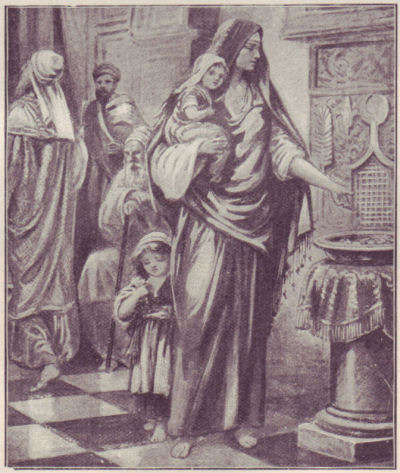
Wow! What a contrast. Maybe Jesus wasn't really praising her after all, but instead he was critiquing a system that was full of flaws and systemic evil. He had just finished talking to the scribes in the prior verses about their hypocrisy. Also, the temple money system worked by people giving money/alms to the temple which the temple authorities were then supposed to give to the people in the community who were in need. Unfortunately, it didn't quite work this well. So that, the leaders of the temple, i.e. the Scribes and Pharisees, were outwardly religious and pious, but inwardly straying from God's original commands as set forth in the law.
In this way, her generosity toward an institution that is meant to provide for her but instead maligns her is not only foolish, but lamented by Jesus. This is a text that introduces us to new questions about what it means to be poor in the first century world and likewise, what it means to be poor today. The nuance in the text that is to be uncovered by Jesus' sentiments towards her when compared to her fellow patriots, who give out of their abundance, is the misfortune that she is forced, by her very devotion to God, to participate in a system that promotes injustice tempered with a (false?) promise of spiritual blessing for giving all that she has to share.
There is so much that we miss in our white, educated, suburban worlds? How, then, does this messianic lamentation speak truth into our ecclesial structures and the systemic injustices they may or may not promote today?
(Oh man, I've never even thought about the widow being a young, single mother...that adds entirely new, deeper dimensions to the issue! It's actually made me tear up a little.)
Sunday, April 27, 2008
For the Love of Jimmy
 Before I can remember, my family has not been shy about our near obsession with President and Mrs. Carter. (So you're going to have to forgive my assumption that the entire world also thinks everything the man writes is genius!) My grandparents proudly display a photo of themselves with Rosalynn and Jimmy on the front porch of Maranatha Baptist Church, Plains, GA in their family room. My mother has been drafting a personal letter to him for over three years now in an attempt to share her admiration and his positive influence in our lives. She just can't seem to fully convey all that's there...so I think it's been laying dormant on her computer for a while. And well, let's be honest, while Tyler and I were dating, I gave him a Jimmy Carter bobblehead. The exhilaration with which he received the gift was added confirmation that surely our marriage was meant to be. (Here is a picture in case you don't believe me.) Jimmy watches our goings-on from the bookshelf in our living room. And well, we named our first born son after him, Jude Carter Mayfield. We like the Carters. When we met him at a book signing at Vroman's here in Pasadena last year, as he hurriedly signed my book and the publishers literally pushed me out of the way I said, "You're awesome!" He looked up and smiled.
Most of the information in that paragraph was useless to the overall point of this post; I just want you to know that we really admire their work both in and beyond the White House. I mean, he's eradicated diseases! Enough you say, on with it. Well, in his book (no, not the controversial Palestinian one), the I'm-the-smartest-man-ever-so-let-me-tell-you-how-to-change-the-world-from-my-perfect-perspective-one, Our Endangered Values: America's Moral Crisis, he closes with a chapter that underscores the most severe crisis to yet hit all of us: poverty. More specifically, Carter warns, "With little doubt, the greatest challenge we face is the growing chasm between the rich and poor people on the earth."

The Universal Declaration of Human Rights guarantees that all persons deserve a standard of living adequate for the health and well-being of themselves and their families. Carter writes in the book, "In my speech at the beginning of the new millennium, I outlined a few proposals for meeting this standard [no big deal, right, wait, it gets better], including increased development assistance with fewer strings, forgiveness of foreign debts of the poorest nations, seeking peaceful solutions when there are known threats to peace, getting to know the poor, giving people authority and responsibility over their own affairs, enhancing cooperations among donors, and recognizing the inevitable impact of abject poverty on human rights, violence, and susceptibility to recruitment for violent acts."
Here's the kicker statement, "Our Center's programs have shown that with wise use of even limited resources, extremely poor people demonstrate remarkable intelligence, innovation, and effectiveness." A few pages later he concludes that when rich people grant impoverished people the chance to respond to their lack of resources and poor condition, they improve their lives. That's for all you skeptics out there thinking that poverty is the mere result of laziness or greed.
One glaring element that is contributing to this disparaging assessment about the rich-poor divide is the fact that so few rich do not even know the name of a single poor person. While we all may not be called to establish an organization like Habitat for Humanity in order to heal this unsightly wound, surely we can stick a much needed band-aid on it by shaking hands with the next person we see who is in need, right? Review with me a few verbs Carter used in his surgical procedure --oops, I mean proposal from the quote above:
1) increase assistance
2) forgive
3) seek peace
4) get to know
5) give authority and responsibility
6) enhance
7) recognize
Is it just me, or is this solution based on one heck of a definition of what it means to be poor!? It seems he's really viewing poverty as a result of basic human rights violations. And this, my friends, is a huge infringement on social justice. From here, Carter cracks down on our present White House administration, which may dismay a few of you, but when confronted with the startling LOW figures in America's foreign aide budget, one can't help but note our lack of generosity as a nation. It's a problem, folks. On a national level, Carter doesn't let Bush and his posse of the hook either. Enumerating just how many decisions have been made, bills passed, and dollars lobbied on behalf of the wealthy, the chapter becomes difficult to finish. But he ends strong.

"We [America] should be seen as the unswerving champion of freedom and human rights, both among our own citizens and within the global community. America should be the focal point around which other nations of all kinds could marshal to combat threats to security and to enhance the quality of our common environment. We should be in the forefront of providing humane assistance to people in need, willing to lead other industrialized nations in sharing some of our great wealth with those who are destitute...There would be no real sacrifice in exemplifying these traits. Instead, our own well-being would be enhance by restoring the trust, admiration, and friendship that our nation formerly enjoyed among other peoples. At the same time, all Americans could be united at home in a common commitment to revive and nourish the religious faith and historic political and moral values that we have espoused and for which we have struggled during the past 230 years."
I couldn't have said it better myself. In fact, I'm not nearly this patriotic, nor do I care to be. But one thing is certain, the path our country is now walking does not seem centered enough on generosity, forgiveness, or peace. I have to claim security then, not in my American heritage, but in another kingdom that surpasses even the potential goodness of America. A kingdom to which Jimmy, too, first claims allegiance. (The End.)
Tuesday, April 22, 2008
Blessed are the Poor, Damned are the Rich
Jesus began his Sermon on the Mount with an audacious statement, "Blessed are the poor, for theirs is the kingdom of heaven." I like Luke's version better. Matthew waters it down a bit in my opinion when he says, "poor in spirit." Speculation thinks Matthew may have been writing to a more middle-class Jewish audience who was currently in the midst of their divorce from the synagogue, or in the early stages of grief and recovery following the divorce. Where as, Luke is in touch with his poverty-stricken brothers and sisters a bit more and already finished with life in the synagogue. Luke, feeling a bit more free in what he can and cannot say, chops off "poor in spirit," and also truncates Matthew's desire to keep this beatitude more focused on attitude and posture. Luke's spirituality, then, seems to veer down a different path than Matthew's right from the get-go.
Oddly enough, then, Matthew doesn't shy away from the story of the rich young ruler which is fully disclosed in chapter 19. "if you wish to be perfect," so reads the NRSV, "go, sell you possessions, and give the money to the poor, and you will have treasure in heaven; then come, follow me." yikes. This pericope is present in all the synoptics. double yikes. Mark 10's reading of the rich young ruler highlights ongoing structural and social sin going on the culture. So we see Jesus loving the rich young ruler more fully and the young man greatly grieved at what he has been challenged to do. Does this show a great divide between the haves and the have nots of Jesus' days in Palestine? Did the rich young ruler acquire his possessions and stature by exploiting others, cheating people in the market place, or not offering full health benefits to his employees?
This seems to make sense with my reading of the text right now, and I'm also following West's ideas in his book, "The Academy of the Poor" which is listed on the right hand column of the blog. Until the young man makes restitution for his earnings and success, in other words, his contributions toward the social and structural sins of his society, he cannot earn enough merit to store any of his treasures in heaven. He was missing the entire point of the law.
So too, don't we miss the entire point of the beatitude when Jesus said, "blessed are the poor?" I don't think he meant blessed are you when you live on student loans, have only a mediocre paying job, or just generally don't feel vibrant and enthusiastic about life these days. Albeit, I think we are all stilled blessed, but the point I'm making is that the poor, and well, those darn camels going through the needle eye too, have an easier time getting into heaven than the rich because God's heart is with them. God loves societal outcasts. Jesus' attention and ministry was repeatedly to those who were lacking stature, monetary comforts, and the disenfranchised (women, children, and immigrants). And with those qualifications, I don't think any of us reading this blog qualify as poor. So, again, blessed are the losers, the societal outcasts, (dare I say it, the illegal Mexican immigrants) because God loves and cares for them because they need God and they need access to more resources for better quality in living. The rich young ruler, not so much. He just wanted to be sure to get a golden ticket into paradise. Too bad God never had a chocolate bar ticket voucher campaign.
When will we be more willing to admit that our practices contribute to structural sins in society? (I don't even like the word sin much anymore, but there doesn't seem to be an adequate synonym for it in this context.) Better yet, will we ever be willing to sell the aspects of our lifestyles that on a daily basis, depending on how honest we're really being, contribute to social and structural sins that degrade, exploit, and hurt those that God works to save? No wonder the ruler left grieving. Following Jesus is not for pansies.
Am I wrong?
Monday, April 14, 2008
Rising Food Costs and the Farm Bill

These charts display the rising cost of Food in the United States from 1998-2000. Notice how the red, 2007 line on the left graph is rising exponentially and is significantly higher than the yellow 2006 line.
This is a brief video of Bill Moyer interviewing David Beckmann, President of Bread for the World about the pending Farm Bill revisions. If you take the time to watch you will be shocked at how Congress is falling desperately short on the issue of caring for America's hungry. Bread and others are lobbying Congress to vote for a change. Currently large and wealthy land/farm owners receive healthy subsidies from Congress (our tax dollars at work), while smaller and more rural farmers are falling into financial destitution due to financial neglect and a lack of other resources. In addition, the working poor are suffering the consequences of rising food costs on general American products such as corn, grains, and dairy. So that, not only are farmers suffering as a result of the current state of this bill, so are the poor, working poor, and food banks who are struggling to keep a 'healthy' supply of food on their shelves. By healthy I mean both a general portion to serve those in need and also the quality of food that is being served.
In the interview Beckmann projects a giant solution: If Congress will redirect the funds that are currently going to giant farms, who don't really even need the funds, and instead send them by way of federal assistance programs, like the Food Stamp program, the nation can cut the hunger population in half within a year! There are currently 2.5 million people on food stamps, the highest amount since the program began in the 1960's and the population of users is increasing daily. So why doesn't congress just vote in favor of the working class on this one? Watch the video out find out.

In the same PBS special, Moyer's reporters interview several working poor citizens who cannot earn enough money working full-time at their minimum-wage paying jobs to feed themselves or their families. Also highlighted are disability recipients, individuals living off of their social security payments, and other families with more than one worker in the home who still cannot make ends meet. It's strong evidence that the chasm between the rich and the poor is quickly approaching an insurmountable divide. The presentation is compelling to say the least.
What does God have to say about this? What is to be said of the people in this country who are working diligently to support themselves and their children but to no avail. What does God especially have to say about our government favoring the rich, while turning a cold shoulder to the poor (not to be confused with turning the other cheek)! Do we really even wanna know?
Those of you reading who are from Nebraska, Alabama, or other states with as much dependence on agriculture production as the two mentioned, you may be interested in checking out this video that specifically addresses the subsidies that the government offers the giant land owners. It helps to explain abandoned rice and corn mills, as well as cotton gins.
One last note, Bill Moyer quickly notes at the close of one of the videos that Kentucky's Senator, Mitch McConnell is asking for tax breaks in regards to the farm bill for KY's horse owners, some of the wealthiest land owners in the state! In a quick comparison, Moyer links this to the attitude and disregard of the infamous, Marie Antoinette. ha, I guess.
P.S. In addition to the Moyer videos, for more information about the farm bill, you can check out several articles from top news sources about the debate right here. Till next time...
Subscribe to:
Posts (Atom)

